Temperament Test & Anger: How to Know Your Type and Control Emotional Fire
Ever wondered why some people have a short fuse while others stay calm under pressure? The answer is often rooted in your innate temperament. Understanding the link between temperament and anger is the key to transforming this fiery emotion into a constructive force. How do I know my temperament? This guide will help you answer that and show you how to harness your emotional energy for personal growth. By exploring your emotional blueprint, you can learn to manage frustration effectively. Your path to self-awareness begins now, and you can take that first step here.
Understanding the Link: How Temperament and Anger Intersect
Temperament is your fundamental, biologically-based way of responding to the world. It governs your energy, emotional intensity, and default reactions. Anger, a universal emotion, is filtered through this temperamental lens, creating different experiences for each of us. Recognizing your core tendencies is crucial for mastering your emotional responses.
What are the Four Basic Temperaments and Their Emotional Tendencies?
Rooted in ancient Greek medicine, the four temperaments provide a timeless framework for understanding human nature. Each has a distinct emotional baseline:
-
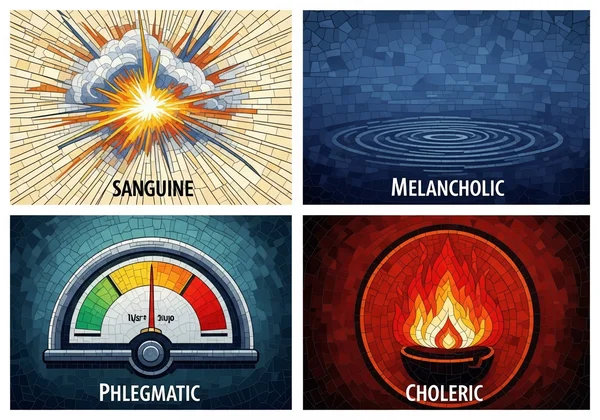
Choleric: Ambitious, decisive, and strong-willed. They are passionate and quick to react with frustration or anger when their goals are blocked.
-
Sanguine: Enthusiastic, sociable, and optimistic. Their emotions are intense but fleeting; they flare up quickly but also forgive and forget fast.
-
Melancholic: Analytical, self-sacrificing, and thoughtful. They feel emotions deeply and are prone to internalizing them, leading to simmering resentment.
-
Phlegmatic: Calm, easy-going, and reliable. They are the least prone to outward anger, often suppressing frustrations until reaching a breaking point.

The Nature of Anger: A Universal Emotion with Unique Expressions
Anger isn't inherently bad; it's a signal that a boundary has been crossed or a goal is threatened. How we act on that signal is determined by our temperament. For a Choleric, anger is fuel; for a Melancholic, deep pain; for a Sanguine, a passing storm; and for a Phlegmatic, slow-building pressure. Understanding your unique expression is key to managing it.
The Fiery Core: Unpacking Choleric Anger
When people ask which temperament gets angry easily, the Choleric type almost always comes to mind. Their proactive, goal-oriented nature gives them little patience for inefficiency, incompetence, or obstacles. While this drive is a tremendous asset, it also makes them uniquely susceptible to frustration and anger.
Why Do Choleric Types Get Angry So Easily?
Choleric individuals are fueled by a desire for control and progress. Anger arises when this control is challenged. Their natural assertiveness can quickly escalate into aggression when they feel their authority is undermined or their time is wasted. Their anger is often external, explosive, and aimed at removing the obstacle in their path. It’s less about personal offense and more about a thwarted objective.

Common Triggers and Signs of a Choleric Anger Outburst
Recognizing the triggers is the first step toward management. Common flashpoints for a Choleric include:
- Incompetence: Dealing with people they perceive as slow or ineffective.
- Disobedience: When direct orders or plans are ignored.
- Obstacles: Any barrier that stands between them and their goal.
- Injustice: A powerful trigger, as their take-charge nature compels them to right wrongs.
Signs of an impending outburst include sharp language, a raised voice, visible tension, and an unwavering focus on the problem.
Constructive Channels: How Choleric Energy Can Be Re-directed
The intense energy behind Choleric anger can be a powerful tool if channeled correctly. Instead of suppressing it, the goal is to redirect it. Cholerics can learn to pause, identify the core problem, and apply their formidable problem-solving skills strategically rather than emotionally. This involves reframing "I'm angry" to "This problem needs a solution, and I have the drive to find it." Discovering if you have this energetic core is simple when you try the free test.
Anger Across the Temperament Personality Spectrum: Other Types
While Cholerics are the most explosive, every temperament experiences anger. Understanding how the other types express this emotion is vital for self-awareness and healthy relationships. Your complete temperament personality profile offers a roadmap to your emotional world.
Sanguine: The Quick Flare-Up and Quicker Forgiveness
Sanguine anger is like a flash of lightning—intense, loud, and over quickly. They are emotionally expressive and can become intensely angry when they feel ignored, unappreciated, or bored. However, their optimistic nature prevents them from holding grudges. After venting, they often forget the issue completely, sometimes leaving others confused by the sudden shift.
Melancholic: The Brooding, Internalized, and Sensitive Fury
Melancholic anger is a quiet, simmering fire. Due to their perfectionistic nature, they are easily hurt by criticism, broken promises, and unmet expectations. Instead of exploding, they tend to withdraw and internalize their anger, replaying the offense in their minds. This can lead to long-held resentment and passive-aggressive behavior if not addressed. They need to find safe ways to express their valid feelings.
Phlegmatic: The Slow Burn, Passive Resistance, and Suppressed Frustration
The Phlegmatic’s trademark is their calm exterior, but still waters run deep. They avoid conflict and go to great lengths to maintain peace, which means their anger is often deeply suppressed. It manifests not as an outburst, but as stubbornness, procrastination, and passive resistance. It takes significant provocation to push a Phlegmatic to overt anger, but when they finally erupt, it can be surprisingly intense, carrying the weight of past frustrations.
Actionable Strategies for Controlling Anger by Temperament
Emotional mastery isn't about never feeling angry; it's about responding wisely. Learning techniques for controlling anger that align with your natural temperament is far more effective than a one-size-fits-all approach. Are you ready to find your type? You can get started with our online temperament test.
Immediate De-escalation Techniques for Intense Moments
When you feel anger rising, these universal techniques can help create space between feeling and reaction:
- The 10-Second Pause: Before you speak or act, stop and take a slow, deep breath. This simple act can interrupt the emotional hijack.
- Physical Distance: If possible, remove yourself from the triggering situation for a few minutes. Walk to another room or step outside.
- Name the Emotion: Silently say to yourself, "I am feeling angry right now." Acknowledging the emotion without judgment can reduce its power.
Long-Term Growth: Tailored Anger Management Techniques
For lasting change, your strategies should play to your temperament's strengths:
- For Cholerics: Focus on proactive problem-solving. Channel your energy into physical exercise. Practice empathy by trying to see the other person's perspective before reacting.
- For Sanguines: Learn to slow down. Before reacting, ask if the issue will matter in an hour. Practice active listening to avoid interrupting and reacting prematurely.
- For Melancholics: Develop direct communication skills. Use "I feel" statements to express your hurt without blaming. Journaling is a powerful outlet for processing internalized anger.
- For Phlegmatics: Practice assertiveness in low-stakes situations. Learn to say "no" to protect your energy and set boundaries before resentment builds. Acknowledge that your feelings are important.
Stress Management for Temperaments: Preventing Anger Before It Starts
Anger is often a secondary emotion, triggered by underlying stress, fear, or sadness. Proactive stress management is the best defense. Knowing your temperament can reveal your biggest stressors and most effective ways to recharge, preventing anger before it even ignites.
Empowering Your Emotions: Your Next Steps in Understanding Anger & Temperament
Understanding your temperament isn't an excuse for poor behavior; it's a tool for profound self-awareness and empowerment. By recognizing your innate emotional patterns, you can stop reacting on autopilot and start responding with intention. You can learn to honor your emotional energy while managing it constructively to build better relationships and a more peaceful inner life.
This journey begins with knowing where you stand. Are you a fiery Choleric, a bubbly Sanguine, a thoughtful Melancholic, or a calm Phlegmatic? Each type has unique strengths and challenges. Unlocking your profile is the key to personalized growth.
Ready to uncover your emotional blueprint? Take the Free Temperament Test now and receive the insights you need to master your emotions!
FAQ Section
Which temperament gets angry easily?
The Choleric temperament is most commonly associated with getting angry easily. Their proactive, goal-driven nature means they have very little patience for obstacles, delays, or incompetence, which can trigger quick and often explosive frustration. Sanguine types can also have quick flare-ups, though they tend to forgive and forget just as fast.
How do I know my temperament to better manage my anger?
The most effective way is a reliable assessment. An online tool, like ours, analyzes your responses to questions about your typical reactions and behaviors. The results provide a clear profile of your dominant temperament, the essential first step to understanding your anger triggers and finding the right management strategies. You can discover your results in just a few minutes.
Is it possible to change my temperament or just control my anger?
Your core temperament is innate and stable, like eye color; you can't change it. However, you can absolutely learn to control my anger and manage its expression. The goal is to become the best version of yourself by developing self-awareness and channeling your natural tendencies in healthy ways.
What is the difference between a personality test and a temperament test when it comes to anger?
A temperament test focuses on inborn predispositions ("nature"), revealing your default emotional responses. A personality test (like the MBTI or Big Five) measures traits developed through experience ("nurture"). To understand anger, a temperament test is more direct, as it addresses the root of your raw, unfiltered emotional reactions.