Conflict Resolution by Temperament Type
Does conflict seem to follow you no matter where you go? The truth is, different personality types approach disagreements in fundamentally different ways. This makes one-size-fits-all conflict resolution advice often ineffective. If you find yourself repeatedly stuck in the same arguments, understanding your natural temperament is the key to transforming your relationships and reducing stress.

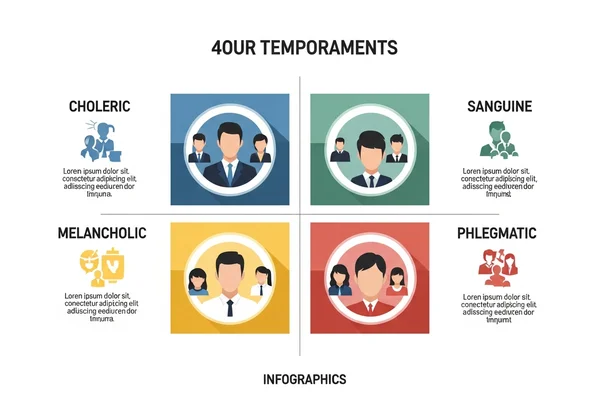
The ancient theory of the four temperaments—Choleric, Sanguine, Melancholic, and Phlegmatic—offers a powerful framework for understanding our core behavioral tendencies, especially under pressure. By learning how you and others react to conflict, you can develop smarter, more empathetic strategies for navigating disagreements in both your personal and professional life.
Ever wonder why you handle disagreements the way you do? Your natural temperament holds the key to unlocking your personal conflict resolution style. You can uncover your type with a free temperament test and gain the self-awareness needed to improve how you handle difficult conversations. This guide will walk you through how each temperament type approaches conflict and provide practical strategies for a more peaceful resolution.
How Your Temperament Shapes Conflict Responses
Your temperament is the foundation of your personality. It influences your emotional responses and how you interact with the world. When a disagreement arises, these innate tendencies come to the forefront, dictating your gut reaction. Recognizing these patterns is the first step toward more conscious and effective communication.
Choleric Temperament: The Direct Confrontation Style
Individuals with a Choleric temperament are natural-born leaders. They are decisive, assertive, and goal-oriented. When faced with conflict, their primary instinct is to take charge and address the problem head-on. They see conflict as an obstacle to overcome quickly and efficiently.
Cholerics are not afraid of confrontation. In fact, they often prefer it, as it allows them to express their point of view directly and push for an immediate solution. Their communication is typically blunt and logical, focusing on facts and outcomes rather than feelings. This directness can be highly effective but may also be perceived as aggressive or insensitive by other personality types.
Sanguine Temperament: The Emotional Volatility Approach
Sanguine individuals are sociable, optimistic, and expressive. They thrive on positive interactions and dislike tension. When conflict erupts, their response is often driven by emotion. They may become visibly upset, animated, and highly verbal, seeking to resolve the issue through passionate discussion.
Sanguines are highly people-oriented, so their main goal is to restore social harmony and positive feelings. However, their emotional intensity can sometimes escalate conflict before it's resolved. They may say things in the heat of the moment that they later regret. Their focus can shift from the core problem to the surrounding emotional drama. Understanding your emotional patterns through our personality temperament test can help you manage conflict intensity.
Melancholic Temperament: The Withdrawal and Analysis Pattern
The Melancholic temperament is characterized by thoughtfulness, sensitivity, and a desire for perfection. When confronted with conflict, their initial response is often to withdraw. They need time and space to process their feelings and analyze the situation from every possible angle.
Melancholics take conflict very personally. They may ruminate on disagreements long after they've passed. They avoid loud arguments and instead prefer to gather all facts before presenting a well-reasoned, logical case. This analytical approach can be incredibly thorough, but their tendency to retreat can be mistaken for disinterest or passive aggression. For Melancholics, taking our detailed temperament analysis can provide deeper insights into your conflict patterns.
Phlegmatic Temperament: The Avoidance and Harmony Focus
Phlegmatics are calm, easygoing, and agreeable individuals who value peace and stability above all else. Their primary response to conflict is avoidance. They will go to great lengths to sidestep arguments, often accommodating others' wishes just to keep the peace.
This desire for harmony means Phlegmatics are excellent mediators, but it can also prevent them from asserting their own needs and desires. They tend to suppress their feelings to avoid rocking the boat, which can lead to unresolved issues and quiet resentment. For a Phlegmatic, the absence of overt conflict is often mistaken for genuine resolution. Discovering if this is your style is easy with an online temperament test.
Tailored Conflict Resolution Strategies for Each Temperament
Understanding these natural responses is only half the battle. The next step is to use that knowledge to adapt your approach. Here are targeted strategies to help each temperament type manage conflict more productively.
Choleric Conflict Resolution: Channeling Directness Productively
For Cholerics, the challenge is to temper their confrontational style without losing their effectiveness. The goal is to transform forceful energy into productive leadership.
- Practice Active Listening: Instead of planning your rebuttal while the other person is speaking, make a conscious effort to listen and understand their perspective.
- Use "I" Statements: Frame your points around your own feelings and observations (e.g., "I feel frustrated when deadlines are missed") instead of accusatory "you" statements (e.g., "You always miss deadlines").
- Schedule a Cool-Down Period: Your instinct is to resolve things now. Force yourself to take a brief pause before reacting. This allows you to respond logically rather than just reactively.
Sanguine Conflict Resolution: Managing Emotional Intensity
Sanguines need to learn how to manage their emotional waves so they can stay focused on the actual problem. The key is to separate the feeling from the fact.
- Focus on the Core Issue: Ask yourself, "What is this conflict really about?" Try to steer the conversation back to the central problem, away from emotional tangents.
- Agree on a Time to Talk: If you feel overwhelmed with emotion, it's okay to say, "I'm too upset to discuss this right now. Can we talk in an hour?" This gives you time to calm down.
- Stick to One Point at a Time: Your mind may jump from one grievance to another. Address one specific issue completely before moving on to the next to avoid overwhelming the conversation.
Melancholic Conflict Resolution: Encouraging Constructive Engagement
For Melancholics, the goal is to move from internal analysis to external communication. You must find the courage to voice your well-thought-out concerns.
- Set a Deadline for Discussion: Your tendency is to withdraw and over-analyze. Prevent this by agreeing on a specific time to address the issue, which forces you to engage.
- Write Down Your Key Points: Organize your thoughts on paper beforehand. This helps you present your case clearly and logically, which plays to your strengths.
- Assume Good Intent: Your sensitivity can lead you to assume the worst. Try to approach the conversation with the belief that the other person wants to find a fair solution.
Phlegmatic Conflict Resolution: Asserting Needs While Preserving Harmony
Phlegmatics must learn that true harmony comes from authentic resolution, not just the absence of fighting. This requires learning to gently assert your own needs.
- Identify Your Needs Beforehand: Before a difficult conversation, take a moment to ask yourself, "What do I truly want from this situation?" Knowing your goal makes it easier to speak up.
- Use Gentle but Firm Language: You can be assertive without being aggressive. Phrases like "I would prefer if we could..." or "It's important to me that..." can express your needs without causing friction.
- Practice Saying "No": Start small. Decline minor requests that you'd normally agree to just to be accommodating. This builds the muscle for setting healthier boundaries in more significant conflicts.
From Conflict to Connection
Mastering conflict resolution isn't about changing your personality; it's about leveraging its strengths. A Choleric’s directness can drive quick solutions, a Sanguine’s passion can rebuild bridges, a Melancholic’s analysis can uncover deep truths, and a Phlegmatic’s calm can create a safe space for dialogue. By understanding your unique style, you can turn disagreements from sources of stress into opportunities for growth and stronger connections.

Ready to take control of your communication style? Start your journey to better conflict resolution by taking our free temperament test today.